What does a day in the life of a museum director actually look like?
At the Maine Mineral & Gem Museum (MMGM) in Bethel, Maine, the answer is rarely simple, and that’s part of the magic.
In this Q&A with MMGM Executive Director Kristy Griffin, she pulls back the curtain on museum life, tracing her path from a childhood fascination with gems and natural history to a career spanning institutions across the country — from Alaska to Maine. Along the way, she’s worn just about every hat the museum world has to offer, shaping how she leads, plans, and envisions MMGM’s future today.
The interview with the Oxford County Mineral and Gem Association (republished here with permission), is led by Clayton Carkin, a retired science teacher, MMGM docent, and passionate advocate for geology education in Maine. His questions spark a wide-ranging discussion on museum work, mineral collections, STEM education, and what it takes to build meaningful public experiences around science and history.
In this interview, you’ll learn:
- What it’s really like to work in a museum (spoiler alert: expect the unexpected)
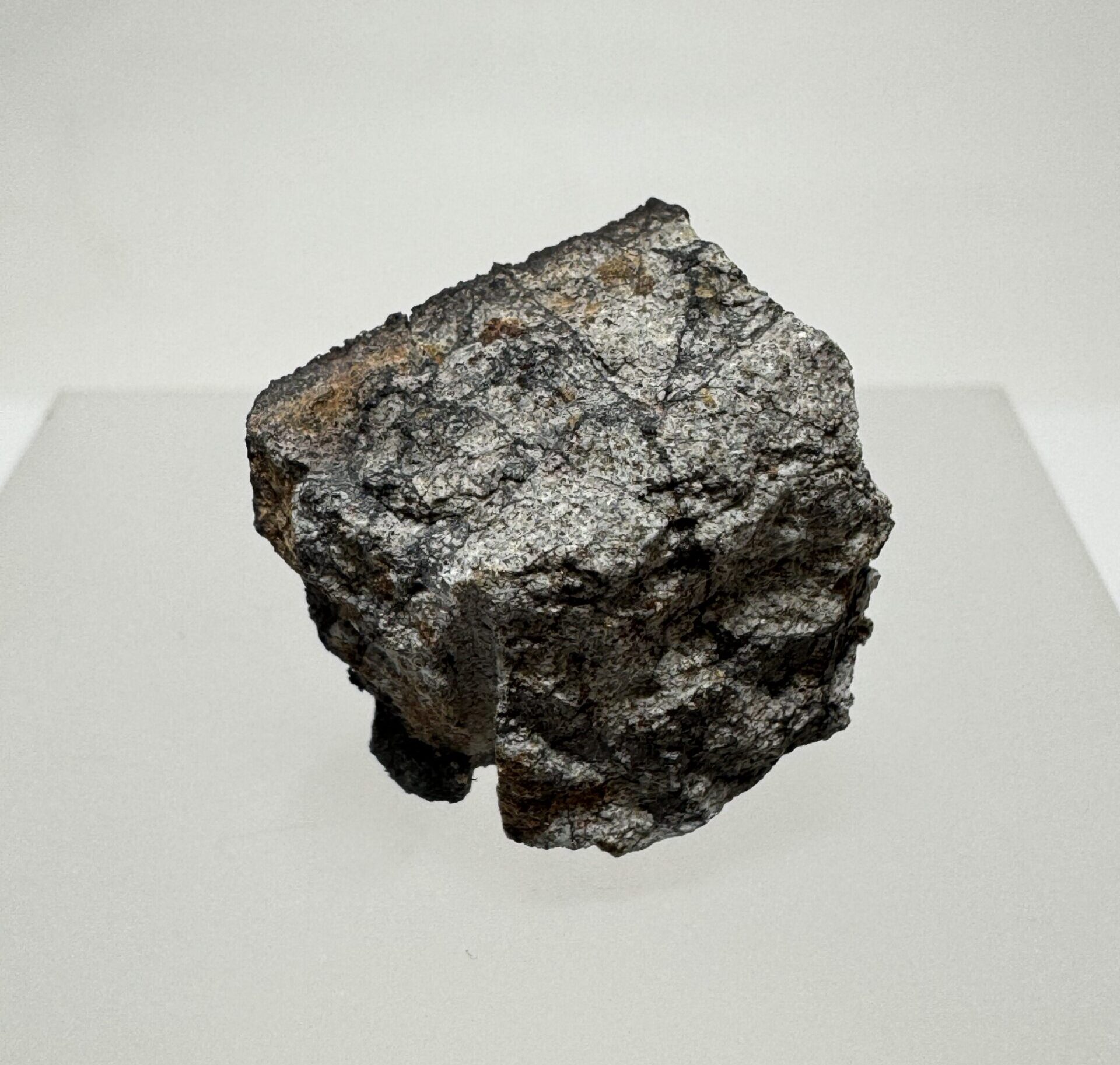
- How museums care for and share mineral and meteorite collections
- The future of science education and hands-on learning at MMGM
- Plans to expand access through digital collections and new exhibits
Whether you’re interested in Maine minerals, museum careers, geology, or behind-the-scenes stories from one of New England’s most unique museums, this conversation offers both a personal and professional look at the work that brings science to life.
Clay: Tell me about your background that prepared you for this position?
Kristy: I have over a decade of experience working in museums from one side of this country to the other. Literally from Alaska to Maine and several other states in between! That includes working in museums that steward collections of art, archives, archaeology, natural history, and historical objects. I have primarily worked in small museums, which I love. You have to wear a lot of different hats when you work in a small museum, and you must be very creative in order to maximize the public impact of the organization without overextending the capacity of the team. Because of this, the job is always challenging — in a very good way.
Clay: How did you begin your interest in minerals, museums, or management?
Kristy: Museums and minerals — simple answer: The Field Museum of Natural History in Chicago. I loved that place growing up. The Hall of Gems and the Hall of Jades had a huge impact on me as a kid. I am one of those people who finds just about everything interesting. I love to learn and wish I had unlimited lifetimes and opportunities to delve into a variety of subject areas. In fact, one of my favorite things about working in museums is that there is always something new to learn.
Clay: What area in the USA are you from, and are you used to Maine’s weather?
Kristy: Maine is the tenth state that I have lived in. I was born and raised in Chicago, which sees more than its fair share of snow (lake-effect) and below freezing temps. I have also lived in Alaska. So yeah, I can handle Maine weather!
Clay: What is your typical day at the museum like?
Kristy: No such thing! I cannot tell you how many times I have ended a workday by saying, “Well, that’s not how I saw this day going!”
Sometimes you find yourself having tea and cookies with the daughter of Ed Ricketts, a pioneering marine biologist and close friend of John Steinbeck, who inspired literary characters including Doc from “Cannery Row” and Jim Casey from “The Grapes of Wrath.” (You can still visit Ed’s laboratory on Cannery Row in Monterey, California.)
Other days, a Volunteer Firearms Expert asks you for some research assistance after finding a hidden hand-carved inscription under a butt plate, and together you discover a treasure that’s been hiding in a museum’s collections for decades — a Model 1876 Winchester repeating rifle owned and used by Webb Hayes, son of President Rutherford B. Hayes. For a decade, Webb went on hunting trips in Wyoming with his unofficial godfather, the legendary General George Crook. Colonel Webb Hayes, a Medal of Honor recipient, accomplished much in his life, but is perhaps best known as the force behind the creation of the first presidential library in the United States, which was, of course, in honor of his father.
Or, you find yourself… planning a wearable art fashion show with a celebrated designer known for creating custom concert fashions for the likes of Lady Gaga, Jennifer Lopez, and Ariana Grande.
Or, talking with the leader of the Sitka Kaagwaantaan Clan, whose storied life included working in aerospace electronics — his work assisted the first lunar landing!
Or, cataloging a 70,000-artifact collection from the Vanoli Site in Ouray, Colorado, a former mining town red light district, which I would love to tell you more about, but may not be a topic appropriate for all ages.
Every day is an adventure when you work in the museum field.
Clay: Are you responsible for planning any museum events?
Kristy: Throughout my career, I have been responsible for conceiving of, planning, supporting, and executing a wide variety of museum programs, exhibitions, and events. In my job at MMGM, I serve more of a supporting role. I do contribute ideas, but I really want staff to drive a lot of the ideation and planning, too. I believe in the right people, in the right positions, doing the right things. The MMGM team is really amazing. My job is to make sure that I am providing the support, tools, and resources for them to be successful.
Clay: Will you be doing any long-term planning for new exhibits, programs, staff, or education?
Kristy: Absolutely! Those things are the essence of what museums do and the vehicle for executing our mission. There is a lot in the works right now. Since starting, I have worked with the Curatorial team to institute a three-year schedule for the rotation of exhibits in the Discovery Gallery. In fact, we will be installing a new exhibit case in May.
MMGM will also be taking its collection online in 2026, thanks to generous grants from the Betterment Fund and the Davis Family Foundation. That means that everyone will be able to engage with our collection from anywhere there is internet access.
Researchers and the public will be able to search the database by mineral species, locality, and collector. This work also greatly improves the museum’s ability to care for our collection.
On the education front, we have some new Education Kits in production now that will focus on Maine Minerals. This builds on our successful pilot of the Space Rocks Education Kits. We have a full slate of summer interns arriving soon to gain professional, hands-on experience in field, lab, and museum work. We will also be launching exhibit tours this summer. And those are just a few examples.
Clay: If you could create a museum wish list, what might be some thoughts?
Kristy: Honestly, a strong endowment. I have seen the museum field go through some rough financial times that often result in staff reductions and even permanent shuttering of museums. It’s not just the museum field that suffers when that happens; there can be very real consequences for the communities that museums serve and the collections that they preserve. Having a substantial endowment and making conservative annual drawdowns provides a relatively stable and sustainable source of operational funds.
The work that museums do is, by and large, powered by humans who have specialized education, training, and skills. The gaps those humans leave when they go can be very difficult to fill effectively. Imagine having a reliable source of general operating funds that covers your core staff and facilities expenses… even during the tough times. Having that kind of stability means that you can fundraise to expand your service to the public, rather than worry about keeping the lights on.
Clay: I am a retired science teacher with a long-term commitment to all science education. Do you have any thoughts about future science education for children and adults at the museum?
Kristy: With the overwhelming majority of states in the U.S. not requiring a year-long Earth or space science course for high school graduation, and only eight states requiring the study of Earth and space science concepts before graduation… I have lots of thoughts. We need to engage the next generation of scientists at an early age, and museums are well-positioned to do that work. Informal educational spaces and object-based learning make learning more enjoyable.
Each year, MMGM serves a substantial number of children throughout Maine and into New Hampshire through our MMGM in Your Classroom program and with MMGM Education Kits. MMGM in the Community takes our programs to libraries, assisted living facilities, and more. We have some big ideas about ways to expand educational programming, but we will need to expand our staff capacity to do so. We are seeking funding that would support those endeavors. Ultimately, our growth must be sustainable, so it means a lot to me to work diligently to manage the expansion of existing programs and the addition of new ones in a way that will set us up in the long run for success.
About the Maine Mineral & Gem Museum:
Nestled in the heart of Bethel, MMGM is home to the most significant collection of Maine minerals and gemstones in the world. A one-of-a-kind destination where geology, history, science, and education come to life, the museum also boasts the largest display of meteorites in the world, including Moon and Mars rocks. Through hands-on exhibits, expert storytelling, and cutting-edge research, MMGM inspires curiosity in visitors of all ages. Inviting them to explore the incredible story of our planet — and beyond. For more information, visit mainemineralmuseum.org or follow us on Facebook, Instagram, and YouTube @mainemineralmuseum.