FOR IMMEDIATE RELEASE
November 3, 2026
HEADLINE-MAKING MARTIAN METEORITE, LANDS AT THE MAINE MINERAL & GEM MUSEUM, MAINE’S PREMIER SCIENCE MUSEUM
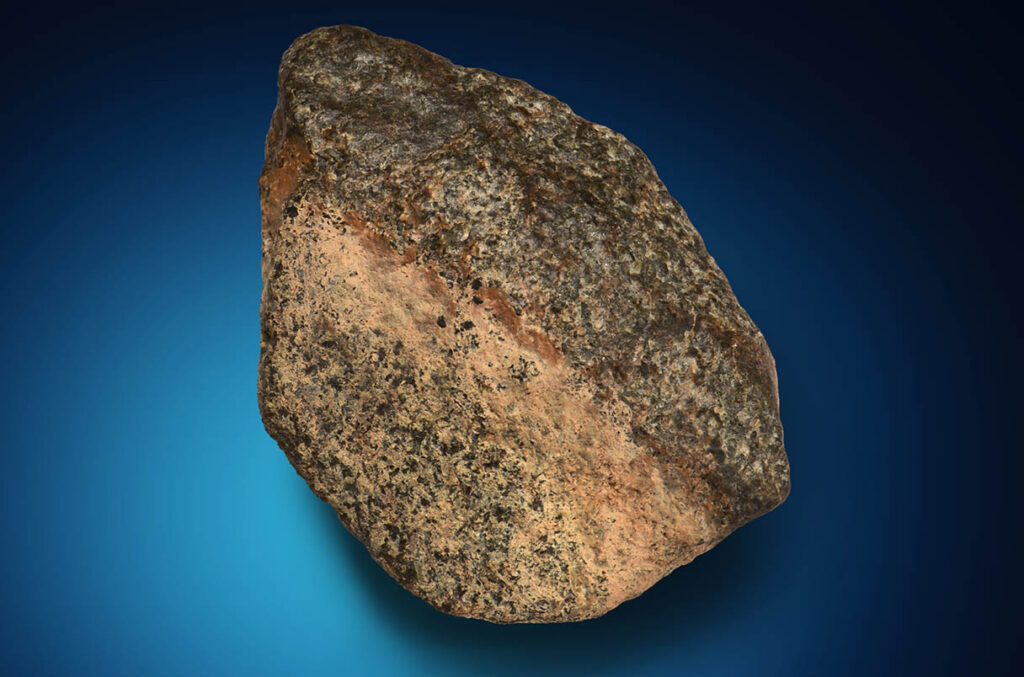
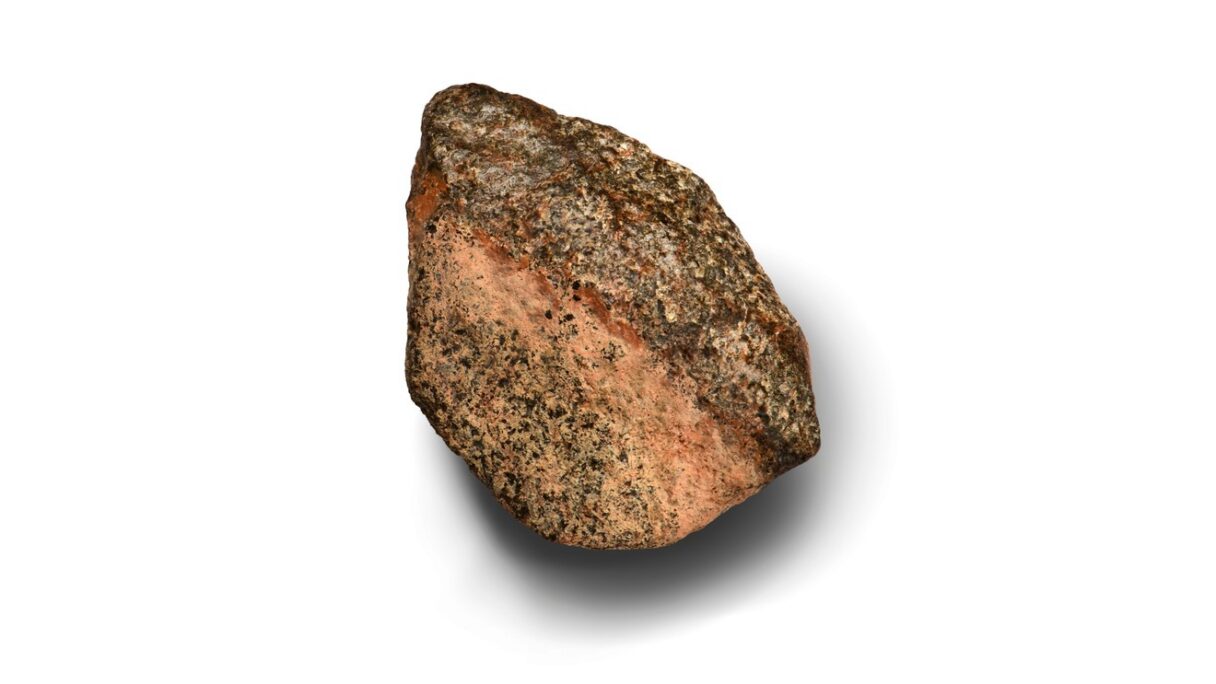
Sought after by scientists worldwide, the vast majority of Teghaza 001 has been acquired by the MMGM, where the largest specimen will go on display November 11th.
BETHEL, MAINE, November 10, 2026 — The Maine Mineral & Gem Museum (“MMGM”), Maine’s premier science museum, announced that it has secured another landmark acquisition, the Martian meteorite Teghaza 001 (TEG 001).
Science, one of the world’s foremost scientific journals, just published an article on the extraordinary TEG 001 meteorite, the vast majority of which resides at the MMGM in Bethel, Maine. Starting November 11, museum visitors will be able to see the largest specimen of TEG 001, displayed next to the single largest piece of the Moon on Earth. Unlike any other Martian sample, TEG 001 is mineralogically unique, originating from an unsampled region of Mars; it is also the second oldest known piece of the Red Planet known to exist. In addition, TEG 001 contains hydrous minerals, offering a snapshot of the long-suspected watery Mars of billions
of years ago — a stark contrast to the barren planet we know today. Because the water alteration occurred 4.1 billion years ago, the meteorite itself is likely even older.
“One of the paper’s reviewers called TEG 001 a Rosetta Stone for Mars…and, indeed, we’ve only
begun to scratch the surface,” said Dr. Yang Liu of NASA’s Jet Propulsion Laboratory in Pasadena,
California, and lead author of the newly published Science article.
Sahrawi meteorite hunters found TEG 001 in Mali’s Sahara Desert in 2022, near an ancient salt mine that was a major North African source of rock salt until the late 1500s. Learning of its existence shortly after the discovery, Darryl Pitt, Meteorite Chair for MMGM, strongly recommended that Dr. Lawrence Stifler, the MMGM co-founder, acquire TEG 001 for the Museum. There is only 1¾ pounds of the TEG 001 meteorite, and samples are in great demand. All research requests are being vetted by MMGM consultant and renowned UCLA cosmochemist, Dr. Alan Rubin. TEG 001 reached Earth after an ancient asteroid struck Mars, launching Martian surface material into space. Some of those fragments entered an Earth-crossing orbit. Exceedingly rare, the total weight of every Martian meteorite documented is less than 500 kg and could fit in the trunk of a mid-sized car.
“Before sending a sample to Yang Liu, I wondered whether TEG 001 might represent a new type of Martian meteorite,” said co-author Dr. Carl Agee, director of the Institute of Meteoritics at the University of New Mexico. “Among the fascinating revelations is evidence of an early Mars that is more Earth-like. The scientific community is fortunate that much of this extraordinary meteorite will be
preserved for posterity at the MMGM.”
About the Maine Mineral & Gem Museum
Located in the mountain town of Bethel, less than 70 miles from Portland, the MMGM holds over
80,000 specimens of pegmatites, polished gemstones and precious minerals, all mined in Maine. In addition, it features 22 interactive exhibits, an extensive laboratory, and more of the Moon than all of the natural history museums in the world combined.
Media Contact
Steve Saleeba steve@hollywoodagency.com 401.480.6466
Spotlight on U.S. meteorites brings together specimens from 43 states, including stones from falls that hit a car, a rooftop, and a piece of a headline-making fall that lit up a Georgia sky and interrupted a resident’s Zoom call. The display features a giant map of America’s documented falls and finds.
The Maine Mineral & Gem Museum (MMGM) will open a new temporary U.S. meteorite exhibit, The Sky Is Falling! Spotlight on U.S. Meteorites, on Saturday, October 10, 2026. The exhibit explores meteorites found across the United States and the remarkable, often astonishing stories behind their discovery. It showcases how landscape, people, and science converged to shape our understanding of the rocks that fall from space.
Of the 46 U.S. states with known recovered meteorites, The Sky Is Falling! features specimens from 43 of them, drawn from the museum’s own collection along with some select loans. Specimens are displayed over a large map charting documented meteorite falls and finds across the country. Visitors can trace where and how each stone came to Earth.
The “how” is where this exhibit comes alive. Alongside the science, The Sky Is Falling! tells the human stories behind the specimens: meteorites that struck a parked car or landed inside a bedroom, stones recovered by amateur astronomers and university students, and falls that advanced our scientific understanding of impacts and meteorite recovery. Among the highlights visitors can expect:
-
- A slice of the Peekskill meteorite (New York, 1992). One of the best-documented falls in history. Thousands at a Friday-night high school football game witnessed a football-sized stone crash through the trunk of a parked Chevy Malibu. Fittingly, the exhibit opens the weekend of the fall’s 34th anniversary (October 9, 1992).
-
- McDonough (Georgia, June 2025). A stone meteorite hunters found mere days after a smaller piece fell into a home and interrupted the resident’s Zoom call.
-
- Park Forest (Illinois, 2003). On loan from meteorite hunter Roberto Vargas. This was the first witnessed U.S. fall of the 21st century. Parts of the falling meteorite collided with a car.
-
- New Orleans (Louisiana, 2003). It punched through a roof, two floors, and an antique desk. On loan from MMGM researcher Alexander “Al” Falster. Al collected fragments of the fall with his mineralogy students the next day.
-
- Searsmont (Maine, 1871): part of the largest meteorite ever found to fall in the state.
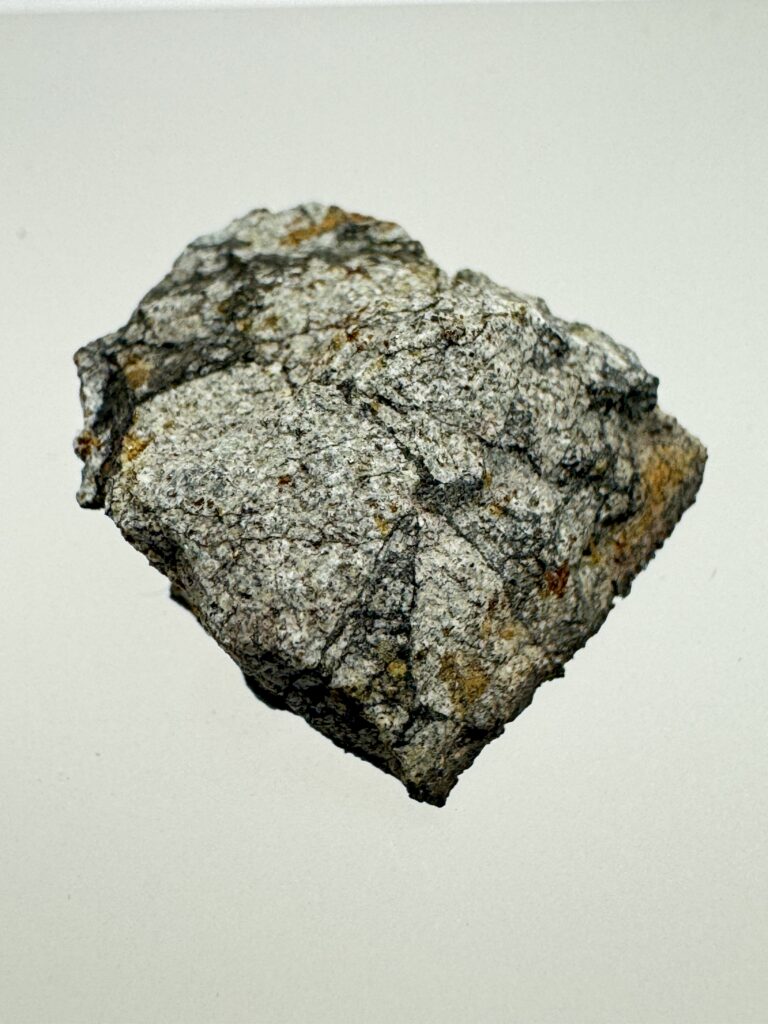
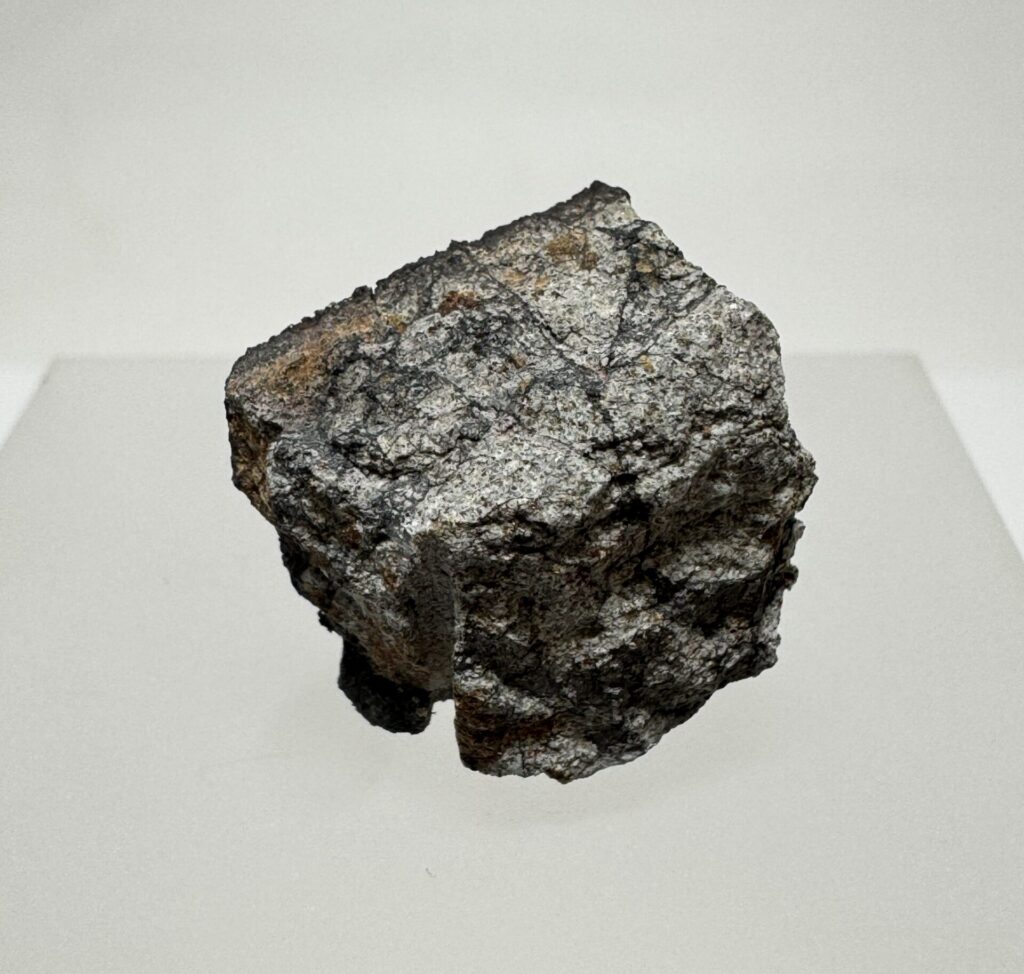
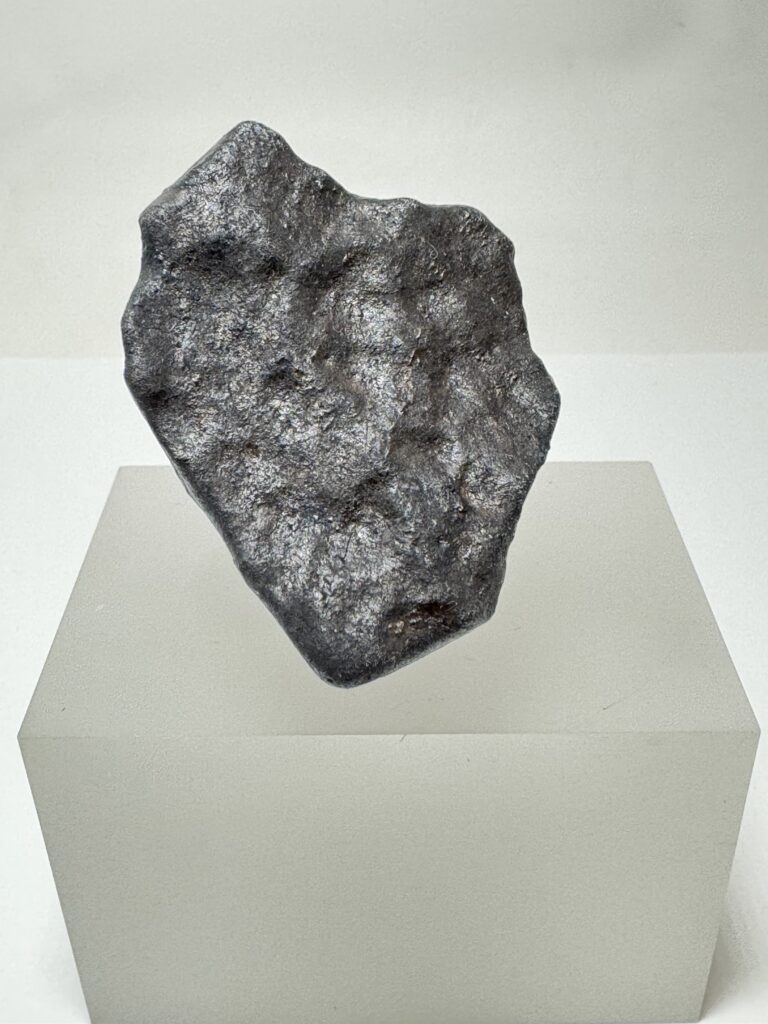
“Of the 46 states where meteorites have been recovered, we’re proud to display specimens from 43, laid out over a map of the whole country,” said Myles Felch, Curator at the Maine Mineral & Gem Museum. “The stories are as remarkable as the stones themselves: from meteorites that struck a car or a person to specimens that helped advance our understanding of impacts and how we recover these rare visitors. It’s a chance to see just how much of the meteorite story has played out right here in the United States, and in Maine.”
“Every one of these specimens is a piece of the solar system that we can hold in our hands and study,” said Patrick Leverone, Meteorite Outreach Manager at MMGM. “Bringing so many U.S. falls together in one place lets visitors see not just where meteorites land, but how each recovery has added to what we know about our place in the cosmos.”
The exhibit drew on “From Weston to Creston,” meteorite collector Frank Cressy’s compendium of U.S. meteorite falls. It helped guide its development and is on sale in the Museum Store. MMGM is proud to display several American meteorites from Mr. Cressy’s own collection. The museum extends special thanks to him and to Connecticut-based meteorite hunter Roberto Vargas for helping the museum represent more U.S. meteorites from more states. Fittingly, several specimens come from recent falls that happened after the book originally published — one of them just last year.
The Sky Is Falling! Spotlight on U.S. Meteorites opens Saturday, October 10, 2026, at the Maine Mineral & Gem Museum. The exhibit is on display for a limited time in the Discovery Gallery, which is free during museum hours.
About the Maine Mineral & Gem Museum
Nestled in the heart of Bethel, MMGM is home to the most significant collection of Maine minerals and gemstones in the world. A one-of-a-kind destination where geology, history, science, and education come to life, the museum also boasts one of the rarest displays of meteorites in the world, including Moon and Mars rocks. Through hands-on exhibits, expert storytelling, and cutting-edge research, MMGM inspires curiosity in visitors of all ages, inviting them to explore the incredible story of our planet — and beyond.
For admission information and upcoming events, visit www.mainemineralmuseum.org and follow us on Facebook and Instagram @mainemineralmuseum.
For more information, reach MMGM media contact Aidan McCourt at amccourt@mainemineralmuseum.or